Academic credentials shape our careers, open doors to opportunities, and validate our skills. But what happens when fake degrees and forged certificates enter the system? Employers lose trust, genuine graduates face unfair competition, and the entire education ecosystem weakens. That’s exactly where blockchain steps in—bringing transparency, security, and authenticity like never before.
Why Academic Credential Verification Matters
Whether it’s a job application, university admission, or skill assessment, verifying academic records is essential. Yet traditional methods are slow, prone to manipulation, and often rely on outdated systems that make verification a tedious process.
Challenges in Traditional Verification Systems
- Manual verification takes time and resources.
- Institutions may delay responses due to administrative backlog.
- Fake certificates look increasingly convincing.
- Cross-border verification is complicated and inconsistent.
Blockchain solves these issues by giving us a secure, fast, and tamper-proof system.
Understanding Blockchain Technology
What Is Blockchain?
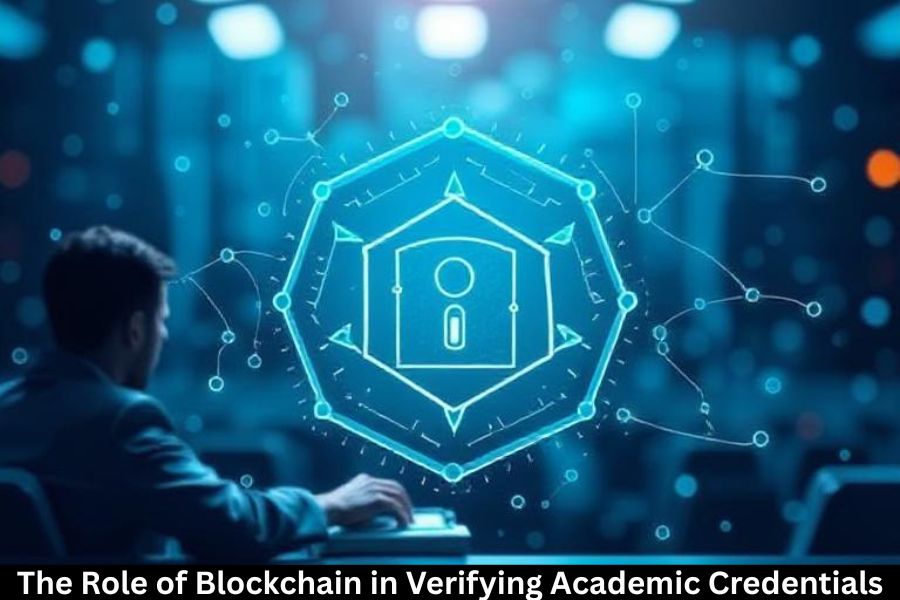
Imagine a digital ledger where every record is securely stored, timestamped, and cannot be changed. That’s blockchain—a decentralized technology that eliminates the need for middlemen while guaranteeing authenticity.
Key Features Relevant to Education
- Transparency: Anyone with permission can verify credentials.
- Security: Data is encrypted and distributed, making it almost impossible to hack.
- Immutability: Once added, records cannot be altered or deleted.
These features make blockchain a perfect fit for academic credentialing.
How Blockchain Transforms Credential Verification
Eliminating Fake Degrees
Fake degrees are a global problem. Blockchain prevents forgery by issuing digital certificates that are cryptographically secured. No one can manipulate or replicate them.
Real-Time Verification
Employers no longer need to wait days—or weeks—for universities to confirm credentials. With blockchain, a simple scan or click can instantly authenticate a certificate.
Immutable Academic Records
Once a credential is uploaded on the blockchain, it stays forever. This ensures transparency and protects both institutions and students.
Advantages of Using Blockchain for Academic Credentials
Increased Trust and Transparency
With verifiable and tamper-proof records, trust between employers, educational institutions, and students increases significantly.
Enhanced Data Security
Because blockchain stores data across multiple nodes, hacking becomes extremely difficult.
Faster Hiring and Admissions Processes
Instant verification means companies can hire faster and universities can process admissions more efficiently.
Reduced Administrative Costs
No more paperwork, manual checks, or extra staffing—blockchain automates the entire process.
Use Cases of Blockchain in Education
Digital Diplomas
Students receive a blockchain-based digital version of their diploma, which they can share securely with anyone.
Micro-Credentials and Skill Badges
Short-term skill courses and certifications can be issued as digital badges stored on the blockchain, perfect for the modern gig economy.
Student Identity Management
Blockchain helps establish verified, unified digital identities for students across platforms and institutions.
Lifelong Learning Records
Every certification, skill badge, or degree earned throughout a career can be stored in one secure place.
Institutions Already Leveraging Blockchain
Universities Using Blockchain for Certificates
Leading universities worldwide—MIT, University of Melbourne, and others—have already adopted blockchain-based credentialing systems.
Platforms Supporting Blockchain Credentialing
Platforms like Blockcerts, Hyland Credentials, and Learning Machine are making blockchain integration accessible for institutions worldwide.
Blockchain-Based Verification Workflow
How Credentials Are Issued
The educational institution issues a digital certificate and stores it on the blockchain. The student receives a secure, shareable version.
How Employers Verify Them
Employers simply scan a QR code or click a link. The blockchain instantly confirms whether the credential is authentic.
Accessibility for Students and Graduates
No more losing physical certificates—everything is stored digitally and accessible anytime.
Potential Challenges and Limitations
Technical Barriers
Not all institutions have the technical knowledge or infrastructure to adopt blockchain easily.
Scalability Concerns
Large-scale implementation requires robust blockchain networks capable of handling high traffic.
Need for Standardization
A global standard for blockchain-based credentials is still evolving.
Adoption Challenges Among Institutions
Some institutions may hesitate due to cost concerns or lack of awareness.
The Future of Blockchain in Education
Integration with AI and Digital Identity
AI-powered verification and blockchain-based digital identities could revolutionize global hiring and academic evaluations.
Global Acceptance and Interoperability
As nations adopt blockchain-friendly policies, cross-border recognition of credentials will become seamless.
Conclusion
Blockchain is reshaping how we verify academic credentials by making the process faster, more secure, and completely tamper-proof. With leading institutions already adopting this technology, the future of education is heading toward a more transparent and trustworthy world. As digital learning and global hiring grow, blockchain-based credentialing will become the new standard—empowering students, employers, and academic systems worldwide.
FAQs
1. How does blockchain prevent fake degrees?
Blockchain stores encrypted, verifiable credentials that cannot be altered or forged.
2. Are blockchain academic credentials globally accepted?
Global adoption is growing, with many universities and employers recognizing blockchain-based records.
3. Can students control who sees their data?
Yes, blockchain allows students to share credentials selectively using secure links or QR codes.
4. Is blockchain expensive for educational institutions?
Costs vary, but many platforms offer affordable or scalable solutions.
5. What industries benefit the most from blockchain-verified credentials?
Sectors like IT, healthcare, finance, and academia benefit from fast and trustworthy verification.