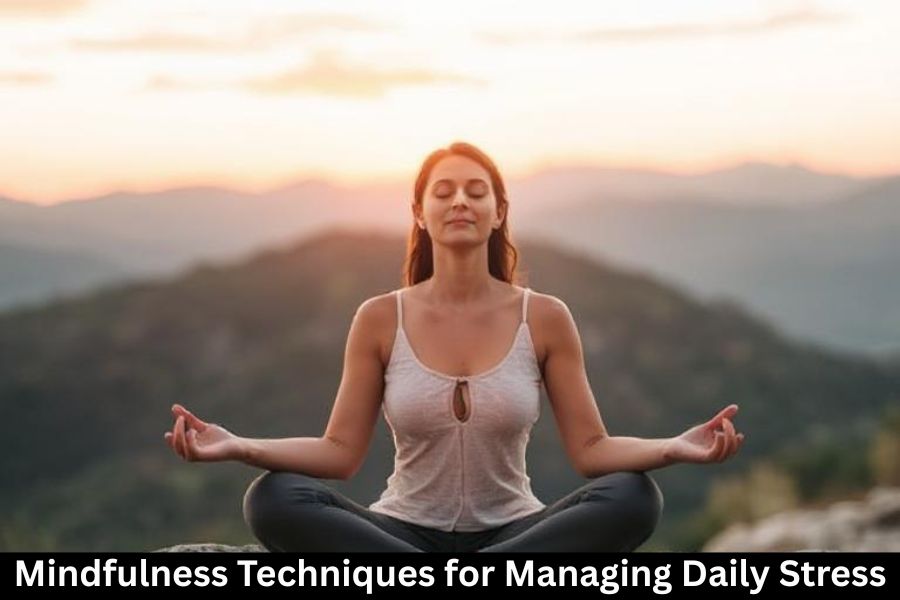
Daily stress feels almost unavoidable today. Whether it’s workload, personal responsibilities, or constant digital noise, many of us end up feeling overwhelmed and mentally drained. The good news? Mindfulness can be your powerful, natural tool to regain control, calm your mind, and improve your emotional well-being.
Let’s explore how mindfulness works and the simple techniques you can start today.
Understanding Mindfulness
What Mindfulness Really Means
Mindfulness simply means being fully present in the moment without judgment. It’s about paying attention to what you’re doing, feeling, and thinking—right now. No rushing, no autopilot, no worrying about past or future.
How Mindfulness Impacts the Brain
Mindfulness strengthens the prefrontal cortex (responsible for decision-making and focus) and calms the amygdala (your stress center). With consistent practice, your brain becomes better at handling emotional triggers.
Why Daily Stress Happens
Modern Lifestyle Triggers
Deadlines, social media, commuting, family pressures—your brain doesn’t get time to disconnect. Stress builds up like clutter in a room.
Emotional and Physical Reactions to Stress
Your body releases cortisol, leading to:
- Faster heart rate
- Muscle tension
- Irritability
- Difficulty focusing
Mindfulness helps switch off that stress response.
Benefits of Practicing Mindfulness
Reduced Anxiety
Mindfulness calms anxious thoughts before they spiral.
Better Emotional Balance
You learn to respond—not react—to situations.
Improved Focus and Clarity
Mindfulness helps cut through mental fog, making everyday tasks easier.
Simple Mindfulness Techniques to Start Today
Mindful Breathing
Take slow, deep breaths. Feel the air entering and leaving your lungs. This signals your nervous system to relax.
Body Scan Relaxation
Lie down or sit comfortably. Move your awareness from your toes to your head, noticing any tension.
Mindful Observation
Pick an object around you. Notice its details—color, shape, texture. This anchors your mind.
Grounding Technique (5-4-3-2-1 Method)
Identify:
- 5 things you see
- 4 things you can touch
- 3 things you hear
- 2 things you smell
- 1 thing you taste
Perfect for sudden stress.
Mindful Walking
Walk slowly and feel each step. Notice your surroundings and breathing.
Integrating Mindfulness Into Your Daily Routine
Morning Mindfulness Ritual
Start your day with 3 minutes of slow breathing or quiet reflection.
Midday Reset Practice
Take short breaks to stretch, breathe, or step outside.
Mindful Eating
Pay attention to flavors, textures, and chewing. This improves digestion and reduces overeating.
Bedtime Wind-Down Routine
Put your phone away, dim lights, and do a short body scan or breathing exercise.
Mindfulness for Work-Related Stress
Micro-Break Practices
60-second breathing breaks during busy hours can reset your mind.
Digital Mindfulness
Silence notifications or set screen-off hours to avoid burnout.
Creating a Calm Work Environment
Declutter your space. A clean desk equals a calmer mind.
Mindfulness for Emotional Stress
Labeling Emotions
Name your feelings: “I’m anxious,” “I’m frustrated.” It reduces emotional intensity.
Practicing Acceptance
Instead of fighting stress, acknowledge it. Acceptance creates inner peace.
Gratitude Awareness
Write or think about 3 things you’re grateful for each day.
Tips to Stay Consistent with Mindfulness
Start Small
Even 2 minutes a day can make a difference.
Remove Expectations
Mindfulness isn’t about perfection. It’s about presence.
Track Your Progress
Use a journal or app to stay motivated.
Common Mistakes to Avoid
Trying to “Empty the Mind” Completely
It’s impossible. Mindfulness is about observing, not eliminating thoughts.
Practicing Only When Stressed
Make it a daily habit for the best results.
Overcomplicating the Process
You don’t need candles, music, or fancy apps—just awareness.
Conclusion
Mindfulness is one of the simplest yet most powerful tools to manage daily stress. With small, consistent steps, you can create a calmer, more balanced life. The key is to stay present, breathe deeply, and allow yourself moments of stillness throughout the day. Stress may be unavoidable, but with mindfulness, it becomes much easier to handle.
FAQs
1. How long do mindfulness practices take to show results?
Most people notice benefits within 2–4 weeks of daily practice.
2. Can mindfulness help with chronic anxiety?
Yes, it reduces overthinking and helps regulate emotional responses.
3. Is mindfulness the same as meditation?
Meditation is a structured practice; mindfulness can be practiced anytime during daily activities.
4. Can children practice mindfulness?
Absolutely! Simple techniques like deep breathing work very well for kids.
5. How do I stay consistent with mindfulness?
Set small daily reminders and be gentle with yourself. Consistency matters more than duration.