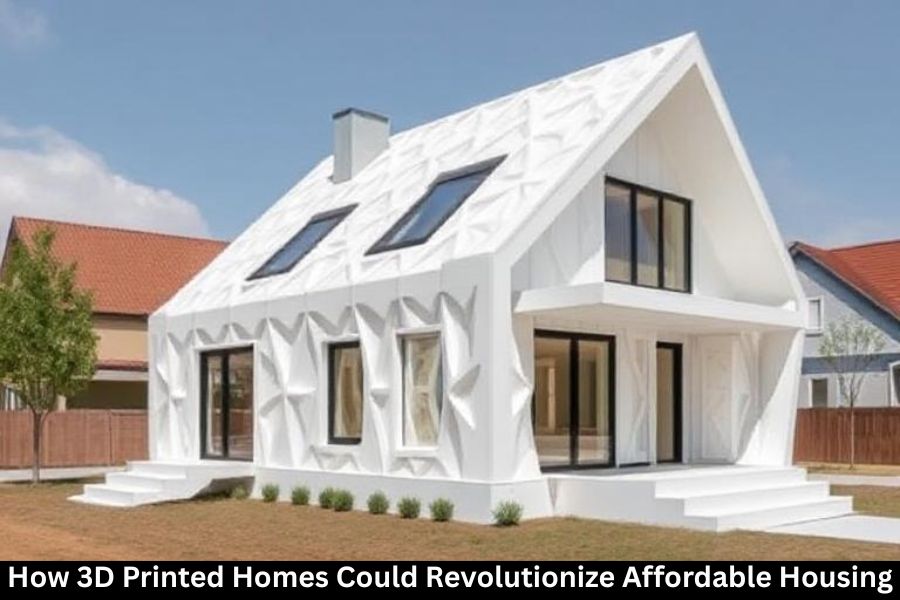
Affordable housing has become a global challenge. Skyrocketing construction costs, labor shortages, and increasing urban populations have pushed millions into unsafe or overcrowded living conditions. But imagine if a home could be built in just a few days—at a fraction of the cost, with sustainable materials, and minimal labor. That’s the promise of 3D printed homes.
Understanding the Global Affordable Housing Crisis
From major cities to rural towns, housing shortages are growing. Traditional construction methods simply can’t keep up. Rising material prices and labor shortages are making the situation worse—and this is where innovative technology steps in.
Why 3D Printing Is Emerging as a Solution
3D printing has moved beyond small objects and prototypes. Today, it can build full-size homes, offering speed, affordability, and sustainability. It promises a huge leap forward in construction efficiency, making homeownership more accessible than ever.
What Are 3D Printed Homes?
The Technology Behind 3D Printing
3D printing, also known as additive manufacturing, involves layering material in precise patterns based on a digital blueprint. In housing, giant printers extrude construction materials to form walls and structural elements.
Materials Used in 3D Construction
Common materials include:
- Concrete-based mixtures
- Eco-friendly composites
- Recycled materials
- Proprietary blends designed for durability
These mixtures are optimized for strength, quick drying, and eco-friendly performance.
How the Printing Process Works
A robotic printer follows a digital design and lays down layers of material. Once the structure is complete, traditional builders add essentials like roofing, wiring, windows, and plumbing.
Benefits of 3D Printed Homes
Lower Construction Costs
3D printing eliminates expensive labor, excess material costs, and lengthy construction timelines. This makes housing significantly more affordable.
Faster Building Timelines
Many 3D printed homes can be completed in 24–72 hours, drastically reducing building time compared to weeks or months.
Reduced Labor Requirements
Unlike traditional construction, which requires large skilled teams, 3D printing can be managed by a few operators and technicians.
Eco-Friendly and Sustainable Options
The technology produces less waste, reduces carbon emissions, and supports sustainable building practices. Many companies even experiment with recycled materials.
How 3D Printing Reduces Housing Costs
Eliminating Traditional Building Inefficiencies
Manual construction often leads to errors, delays, and inefficiencies—3D printing removes these with automated precision.
Minimizing Waste and Energy Consumption
Since materials are used exactly where needed, waste is drastically reduced.
Affordable Designs That Don’t Compromise Quality
Despite lower costs, 3D printed homes can be structurally strong, energy-efficient, and resistant to natural disasters.
Real-World Examples of 3D Printed Housing
Communities Built Using 3D Printing
Countries like the U.S., Mexico, and the Netherlands have already developed entire 3D printed neighborhoods designed for low-income families.
Governments Adopting 3D Printed Homes
Several governments are exploring 3D printed housing to address shortages quickly and affordably, especially in rural and disaster-affected areas.
Non-Profit Initiatives Focusing on Low-Income Families
Organizations like ICON and New Story are using 3D printing to build safe, durable homes for families in need.
Technology Innovations Driving 3D Printed Homes
Robotics and Automated Construction
Advanced robotics ensure precision, speed, and reduced human error.
AI-Driven Design and Precision
AI helps create safer, more efficient structural designs while optimizing material use.
New Materials Enhancing Durability and Insulation
Innovations in concrete and composites offer strength, fire resistance, and energy efficiency.
Challenges Facing 3D Printed Homes
Regulations and Policy Barriers
Many regions lack building codes and regulations for 3D printed homes, slowing adoption.
Limited Public Awareness
People are still unfamiliar with the concept of living in a 3D printed home, creating skepticism.
Scalability Issues
Scaling production to build thousands—or millions—of homes will require massive infrastructure investment.
Concerns About Long-Term Durability
While early results look promising, long-term studies on durability are still ongoing.
Comparison: Traditional Construction vs. 3D Printing
Cost Differences
3D printed homes can cost 30–60% less than traditionally built homes.
Speed and Labor Requirements
Traditional methods require weeks of labor; 3D printing can finish the structure in days.
Environmental Impact
Traditional construction generates significant waste, while 3D printing minimizes it.
The Future of 3D Printed Housing
Integration with Smart Home Technology
Smart lighting, automated security, and energy-efficient systems can be easily incorporated into 3D printed designs.
Potential for Disaster Relief Housing
3D printing can rapidly build shelters after earthquakes, floods, and hurricanes.
Global Adoption in Developing Countries
Affordable, durable, and fast—perfect for addressing housing shortages in rapidly growing nations.
Conclusion
3D printed homes are more than a technological trend—they’re a potential game-changer for global housing. With faster build times, lower costs, and eco-friendly materials, 3D printing holds the power to transform communities and make safe housing accessible to everyone. As technology advances and awareness grows, we may soon see 3D printed neighborhoods becoming the norm rather than the exception.
FAQs
1. How long does it take to 3D print a house?
Most homes can be printed in 24 to 72 hours, depending on size and design.
2. Are 3D printed homes safe and durable?
Yes, these homes use strong materials designed to withstand natural forces.
3. Can 3D printed houses be customized?
Absolutely. Digital designs allow endless customization options.
4. Are 3D printed homes environmentally friendly?
Yes, they reduce waste, use fewer materials, and can incorporate eco-friendly blends.
5. Will 3D printed homes become mainstream?
As technology grows and regulations adapt, they are expected to play a major role in future housing.