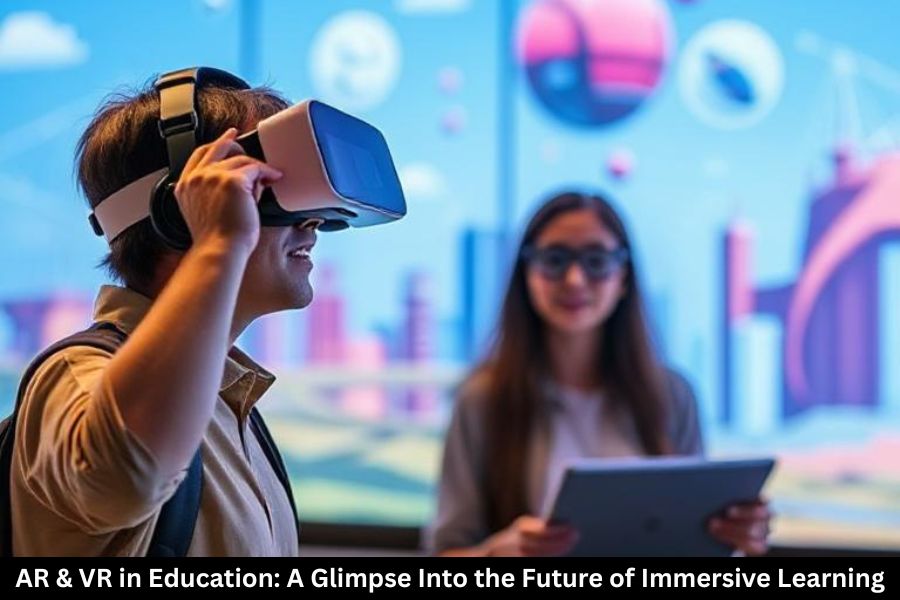
Augmented Reality (AR) and Virtual Reality (VR) are revolutionizing the way we approach learning. AR overlays digital information onto the real world, while VR immerses students in a fully simulated environment. Together, they create experiences that go beyond traditional textbooks and classrooms.
Why Education Is Embracing Immersive Technology
From elementary schools to universities, educators are discovering that AR and VR boost engagement, deepen understanding, and make abstract concepts tangible. Imagine exploring the human bloodstream or walking through ancient Rome—all without leaving the classroom!
The Benefits of AR and VR in Classrooms
Enhancing Engagement and Retention
Immersive experiences capture attention like never before. Students don’t just read or hear—they see, touch, and interact with content, making it more memorable.
Personalized Learning Experiences
AR and VR can adapt to individual learning styles. Visual learners explore 3D models, while kinesthetic learners manipulate virtual objects, creating a truly personalized journey.
Encouraging Collaboration and Interaction
Virtual environments promote teamwork. Students can collaborate on problem-solving, conduct experiments together, or explore worlds side by side—even remotely.
Overcoming Learning Barriers
For students with disabilities or geographical limitations, immersive technology provides access to experiences that were previously impossible.
How AR Transforms Education
Interactive Textbooks and Study Materials
AR brings textbooks to life. Diagrams pop out in 3D, animations explain complex processes, and interactive quizzes enhance comprehension.
Real-World Applications Through AR
AR allows students to see practical applications of theories. Engineering students can overlay virtual components onto machines, while medical students can study anatomy in real-time.
Field Trips Without Leaving the Classroom
No budget for a museum trip? AR can turn the classroom into an immersive zoo, historical site, or distant ecosystem.
How VR Transforms Education
Virtual Labs for Science Experiments
VR provides safe environments for experiments. Students can mix chemicals or dissect organisms without safety risks or expensive materials.
Immersive Historical and Cultural Experiences
Travel back in time to ancient civilizations or explore foreign cultures. VR makes history and geography tangible, memorable, and exciting.
VR Simulations for Skill Training
Medical students, pilots, and engineers benefit from VR simulations that replicate real-world challenges in a controlled environment.
Case Studies of AR & VR in Education
Primary and Secondary Schools
Schools using VR field trips report higher student engagement and test scores, while AR math apps help visualize abstract concepts.
Higher Education Institutions
Universities are employing VR labs for engineering, medical simulations, and architecture, reducing costs while improving hands-on learning.
Special Education Programs
Immersive tools help students with autism or ADHD focus, practice social interactions, and experience concepts at their own pace.
Challenges of Implementing AR and VR
High Costs of Technology
Equipment like VR headsets and AR-enabled devices can be expensive, limiting accessibility in some schools.
Teacher Training and Adaptation
Educators must learn to integrate technology effectively, requiring professional development and ongoing support.
Technical Limitations and Accessibility
Connectivity issues, software bugs, and hardware constraints can hinder smooth implementation, particularly in remote areas.
Best Practices for AR and VR Integration
Choosing the Right Content
Select age-appropriate, curriculum-aligned AR/VR experiences that enhance, not distract from, learning objectives.
Balancing Traditional and Immersive Learning
AR and VR should complement traditional methods, not replace them. A blended approach maximizes understanding.
Evaluating Learning Outcomes
Regular assessment ensures that immersive tools truly enhance learning and engagement, providing measurable benefits.
The Future of AR and VR in Education
AI-Driven Immersive Learning
Artificial intelligence could personalize VR/AR lessons in real-time, adapting difficulty levels and content based on student performance.
Cloud-Based Virtual Classrooms
Remote learners will be able to join fully immersive classrooms from anywhere, bridging gaps caused by distance or pandemic restrictions.
Expanding Global Access
Affordable AR and VR solutions are gradually democratizing education, providing quality learning experiences to underserved regions.
Ethical and Social Considerations
Privacy and Data Security
Immersive platforms collect data. Protecting student privacy is critical in AR/VR deployment.
Screen Time and Cognitive Effects
While immersive learning is engaging, prolonged use may strain eyes or impact mental health, requiring balanced implementation.
Equity in Technology Access
Schools must ensure all students have equal opportunities to benefit from AR and VR, avoiding widening the digital divide.
Tips for Educators and Students
Starting Small With Immersive Tools
Introduce AR apps or VR field trips gradually to gauge effectiveness and ease adaptation.
Encouraging Creative Exploration
Allow students to create content, explore virtual environments, or build AR models to foster creativity.
Integrating AR/VR Into Curriculum Seamlessly
Align immersive experiences with learning objectives to avoid distractions and maximize comprehension.
Conclusion
AR and VR are no longer futuristic fantasies—they are reshaping education right now. By creating immersive, interactive, and personalized experiences, these technologies foster deeper learning, engagement, and collaboration. As schools and universities continue to adopt AR and VR, we can expect a new era where learning is more accessible, exciting, and impactful than ever before.
FAQs
1. How is AR different from VR in education?
AR overlays digital elements onto the real world, while VR immerses students in a fully simulated environment.
2. Can immersive learning improve student performance?
Yes, studies show AR and VR increase engagement, retention, and comprehension across subjects.
3. Are AR and VR suitable for all grade levels?
Yes, content can be tailored for primary, secondary, and higher education, including special education programs.
4. What are the main challenges of AR/VR in classrooms?
High costs, teacher training needs, and technical limitations are primary challenges.
5. Will AR and VR replace traditional teaching methods?
No, immersive technology complements traditional teaching, creating a blended learning experience.