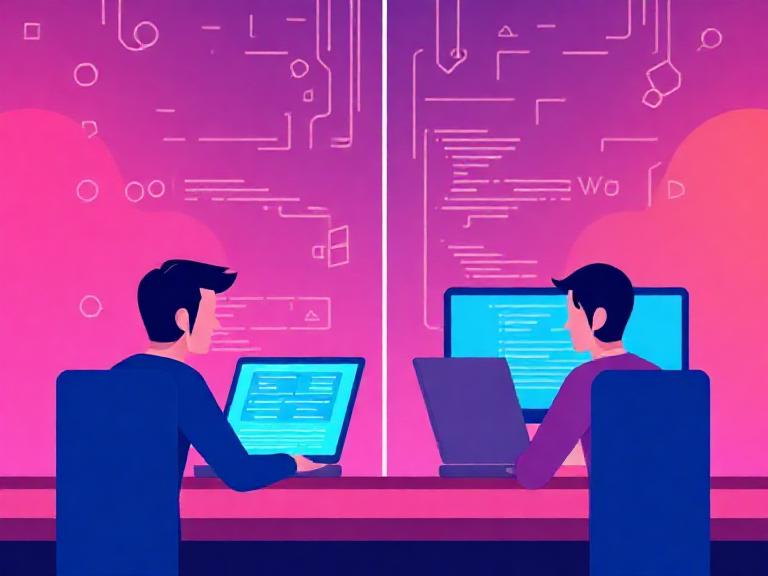
When you visit a website, what you see on the screen and what happens behind the scenes are two different worlds. Knowing the difference between frontend and backend development helps beginners choose the right learning path and understand how websites actually work.
How Both Sides Work Together
Frontend and backend developers are like two halves of the same brain—they rely on each other. Without the backend, the frontend can’t show dynamic content. Without the frontend, users can’t see or interact with the backend’s work.
What Is Frontend Development?
Definition and Purpose
Frontend development focuses on what users see and interact with on a website. It’s all about building the user interface (UI) and making the user experience (UX) smooth, visually appealing, and responsive.
Common Technologies
HTML
HTML forms the skeleton of every webpage, giving it structure.
CSS
CSS styles the content—colors, layouts, fonts, animations, and more.
JavaScript
JavaScript adds functionality, allowing users to interact with elements in real-time.
Modern Frontend Frameworks
React
Highly popular and component-based, great for building scalable interfaces.
Vue
Lightweight, simple, and beginner-friendly.
Angular
A complete framework offering advanced tools for large-scale applications.
What Is Backend Development?
Definition and Purpose
Backend development powers the engine of a website. It handles data, logic, authentication, servers, and everything users don’t see but heavily rely on.
Common Backend Technologies
Node.js
JavaScript-based and great for building scalable, fast applications.
Python
Loved for its simplicity and power—used in everything from APIs to AI.
PHP
Widely used for CMS platforms like WordPress.
Databases in Backend
SQL Databases
Structured, relational databases like MySQL or PostgreSQL.
NoSQL Databases
Flexible and non-relational options such as MongoDB.
Key Differences Between Frontend and Backend
Role in Web Development
Frontend handles the visuals; backend manages the logic, data, and server-side tasks.
Tools and Skillsets
Frontend requires design sense and understanding of user behavior.
Backend requires analytical thinking, security knowledge, and database expertise.
Visibility vs. Behind-the-Scenes Work
Frontend work is visible to users.
Backend work runs behind the curtain but has a massive impact on performance.
Performance Considerations
Backend performance affects how fast data loads.
Frontend performance affects how fast a site feels and responds.
Similarities Between Frontend and Backend
Problem-Solving
Both roles involve troubleshooting, debugging, and improving workflows.
Use of Version Control
Developers from both sides use Git to track and manage code changes.
Collaboration With Teams
Frontend and backend developers constantly communicate, especially while connecting APIs.
How Frontend and Backend Work Together
APIs as the Bridge
APIs (Application Programming Interfaces) enable communication between frontend and backend. The backend sends data in formats like JSON, and the frontend displays it beautifully.
Data Flow Between Client and Server
Users request data ⇒ backend processes it ⇒ frontend displays it.
This teamwork is the secret behind every dynamic website.
Career Paths
Job Opportunities in Frontend
Roles include:
- Frontend Developer
- UI Developer
- Web Designer
Companies look for creativity, modern framework skills, and UX understanding.
Job Opportunities in Backend
Backend roles include:
- Backend Developer
- API Engineer
- Database Administrator
These jobs require strong logic, security knowledge, and experience with servers.
Full-Stack Development Option
Full-stack developers handle both sides, making them highly versatile and in-demand.
Choosing the Right Path
Which One Is Easier for Beginners?
Frontend feels easier at first because results are visible instantly. Backend becomes easier once you understand logic and databases.
Skills Based on Personal Interests
- Love design and visuals? Go frontend.
- Prefer problem-solving and working with data? Go backend.
- Want both? Choose full-stack.
Future of Frontend and Backend Development
Trends in Frontend
- More use of AI-driven UI tools
- Faster frameworks
- Component-based architectures
- Increased use of Web Components
Trends in Backend
- Serverless computing
- Microservices
- AI-powered automation
- More secure authentication systems
Conclusion
Frontend and backend development complement each other, creating the complete web experience users enjoy every day. Whether you’re drawn to visuals or fascinated by data and logic, both paths offer exciting opportunities. Understanding the differences—and similarities—helps you choose the career that best fits your strengths and interests. And who knows? You might even end up mastering both sides.
FAQs
1. Can one person do both frontend and backend development?
Yes! That’s called full-stack development, and it’s a very popular career path.
2. Which field pays more: frontend or backend?
Both pay well, but backend often has a slightly higher average due to the complexity of server-side work.
3. Do I need math skills for backend development?
Only basic logic and problem-solving—nothing too advanced.
4. Is frontend only about design?
No. Design is part of it, but frontend also involves complex logic, animations, and performance optimization.
5. What should beginners learn first?
Start with HTML, CSS, and JavaScript. They form the foundation for both frontend and backend (via Node.js).